

Say Goodbye to Gelatin? Exploring the Innovative Preparation Technology of Plant-Based Softgel Capsules
More and more people who want to live healthy lives are becoming interested in where ingredients come from. Whether they follow vegetarian diets, have religious reasons like Halal or Kosher, or just want to avoid animal products, the popularity of plant-based products is growing rapidly. Along with this shift, the soft gel capsules we usually see are changing quietly-plant-based softgel capsules are starting to appear in our medicines and supplements.
Today, let's discover the story behind this new technology and see how these small, simple capsules are being transformed.
The Inside Scoop: The "Skin" and "Core" of Plant-Based Capsules
Unlike traditional capsules made from animal parts like bones or skins, plant-based capsules have a shell made from natural plant ingredients.

The "Skin" Made from Plants
This outer layer is mainly created using natural plant-based substances that gel or thicken.
Key Ingredient: Hydroxypropyl Methylcellulose (HPMC)
This is a common, reliable ingredient made from plant fibers from wood or cotton. It makes transparent, stable capsules.

Other Options:
Some capsules use ingredients like modified starch, seaweed extracts (called carrageenan and alginates), which help add strength and flexibility to the shell.
To make the shell perfect, they also include things like:
- Plasticizers (glycerin and sorbitol) to keep the capsules soft and flexible.
- Light-blocking agents (like titanium dioxide) to protect ingredients sensitive to light.
- Water, which helps mix everything during manufacturing but is removed when the capsule is finished.

The Rich "Core" World
The capsules can be filled with various contents, such as fish oil (using algal oil for a fully plant-based version), vitamins, plant extracts, and other oily or fat-soluble substances, making them widely applicable.

The Journey of Creation: The Production Process of a Plant-Based Capsule
Making plant-based soft capsules involves careful steps and special techniques, mainly using a process called the rotary die method.

Preparing the "Skin Essence":
Use Gelatin Melting System, raw materials like HPMC are mixed quickly in hot water to create a smooth, clear gel without bubbles. This step needs precise measurements and careful control
Creating the "Perfect Film":
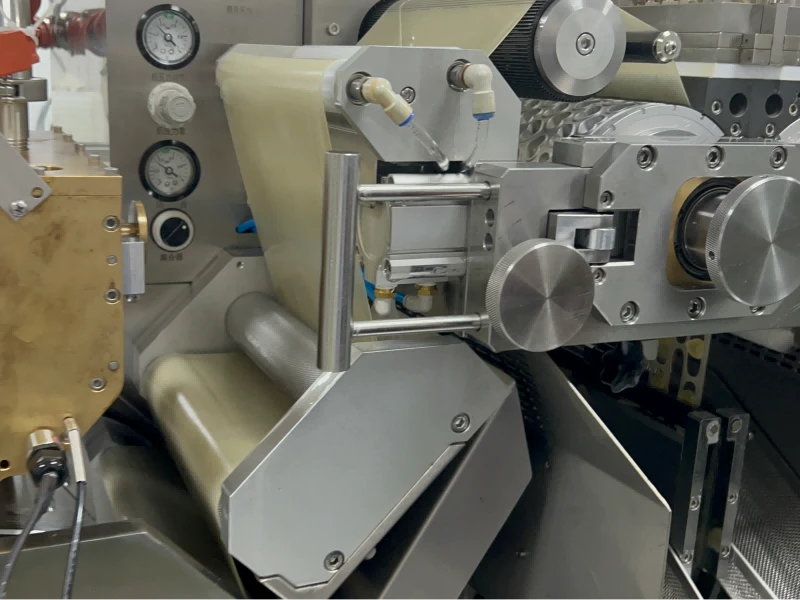
The gel is poured into a specially controlled heated container. Two large rollers spin in the gel, picking up and forming a thin, even layer of film.

Filling, Shaping, and Sealing (The Most Important Step!):
Use Softgel Encapsulation Machine,two sheets of gel come together between perfectly aligned molds. At this point, the filling-such as vitamins or supplements-is injected in the right amount between the sheets. The molds then press, cut, and seal the capsule shape, separating the finished capsule from any leftover gel. Unlike gelatin capsules, which can change shape with temperature, the plant-based ones are sealed by the pressure that fuses the polymer chains together to form a secure seal

The Long "Drying and Shaping" Process:
After the capsules are formed, they are still wet and soft. They need to be dried carefully in a softgel capsule tumble drying machine (softgel dryer). By slowly changing the temperature and humidity, the extra moisture is removed gently. This helps the capsules become firm but not misshapen. Doing this carefully is very important to making good final products.
Final "Inspection and Packaging":
Once the capsules are dried, they are cleaned and checked automatically for any defects. The good ones are then packed and prepared for sale.
Strengths and Challenges: Plant-Based vs. Gelatin-Which Is Better?
Plant-based softgel capsules have several benefits:
They come from natural plant sources, which makes them suitable for vegetarians and people with certain religious restrictions, making them more inclusive.
They are chemically more stable, which helps keep the contents fresh and effective for longer periods.
They dissolve reliably in the stomach and intestines, regardless of stomach acid levels, ensuring the medicine or supplement is released properly.
However, there are some difficulties as well:
The process to make these capsules is more complicated and takes more time, which can make them more expensive.
They are slightly less strong physically compared to gelatin capsules, so they need to be packaged and transported carefully.
They are more sensitive to moisture and need to be stored in dry conditions to prevent damage.

Future Outlook
Thanks to ongoing advances in technology, plant-based soft capsules are now performing just as well as, or even better than, traditional gelatin capsules. This is thanks to improved designs and better manufacturing methods.
These capsules aren't just created because people want them; they also show how technology is helping people stay healthy.
In the future, we might see more plant-based capsules that release their contents at specific times or in certain areas of the body, opening up new possibilities for health and medicine. So next time you see a clear, soft capsule, take a closer look-chances are, it's not made from animals anymore but is a modern creation made with the help of technology and plants.